A deck railing does more than create a safety barrier. It influences your deck design, affects long-term maintenance, and helps shape how your outdoor living space looks and functions. The right railing can complement your home’s architecture while supporting the way you use the space every day.
From classic wooden deck designs to modern railing systems that preserve scenic views, homeowners can choose from a wide range of railing styles and materials. Understanding the strengths and tradeoffs of each option can help you choose a rail design that fits both your home and your lifestyle.
This guide explores common deck railing types, including cable, wood, composite, metal, and glass. You’ll also learn how to compare maintenance requirements, visibility, weather performance, and cost before selecting the best option for your deck or porch.
Main Takeaways
- Cable railings offer a modern, minimalist appearance while preserving views and open sightlines.
- Wood railings complement traditional and craftsman style homes but require regular staining and sealing.
- Composite railings provide a wood-like appearance with lower maintenance requirements than natural wood.
- Metal railings, including aluminum railing systems, offer durability and strong weather resistance.
- Glass railings maximize visibility and can help make your deck feel more open.
- The best railing choice depends on your deck design, budget, maintenance preferences, and local climate conditions.
Popular Deck Railing Types
Your choice of railing material shapes your deck’s appearance, lifespan, and maintenance needs. The sections below highlight some of the most common deck railing design ideas used in residential projects.
Cable Railings
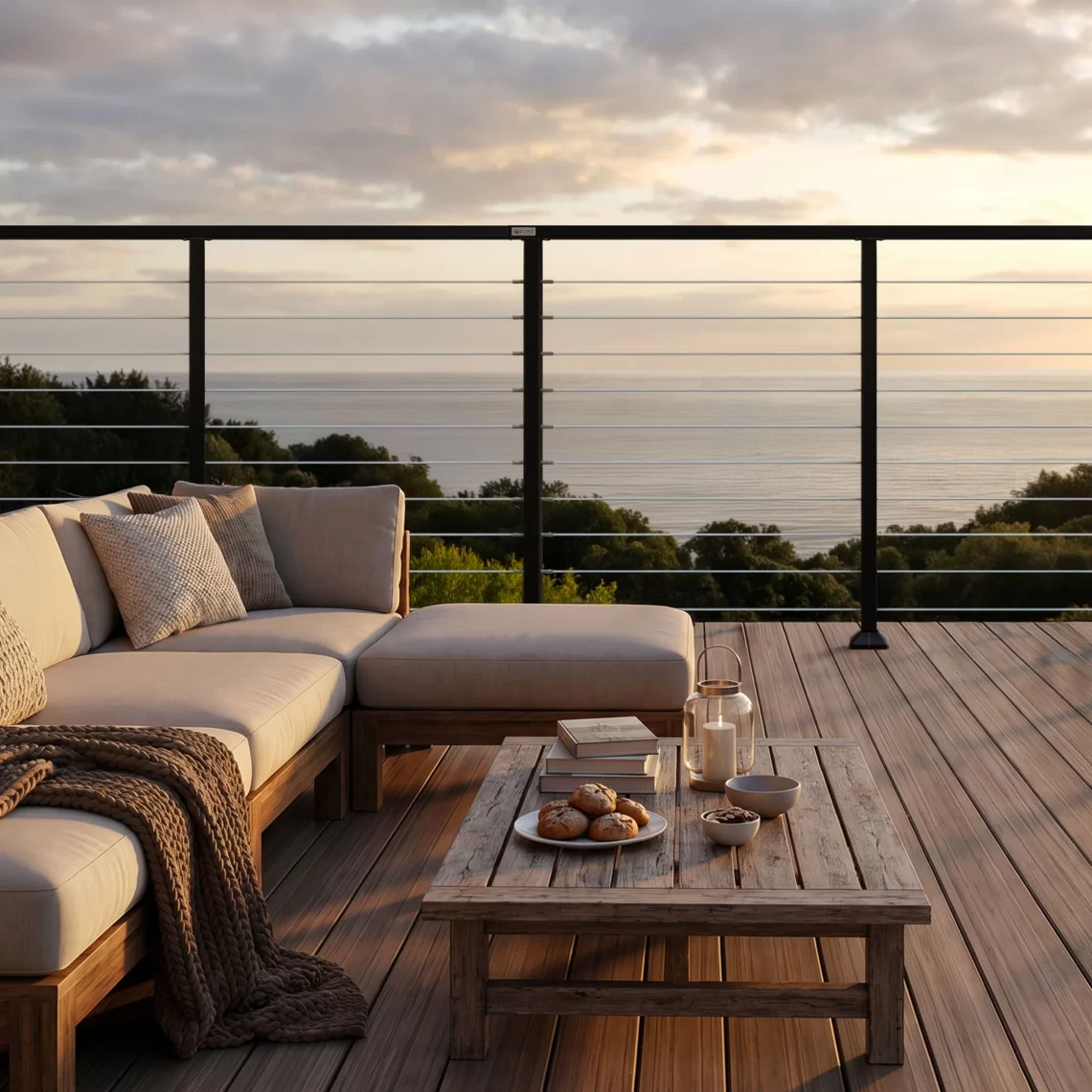
Cable rail systems use stainless steel cable wire stretched between railing posts to create a sleek, open appearance. This rail design has become increasingly popular in modern deck projects because it preserves views while maintaining safety.
Benefits include:
- Open sightlines
- Minimal visual obstruction
- Durable stainless steel construction
- Low maintenance requirements
Many homeowners consider cable railing perfect for properties with water, mountain, or wooded views because the system remains less noticeable than traditional balusters. Just make sure to check local building codes before installing, as some areas have specific cable spacing requirements.
ALEKO offers cable railing kits designed for both flat or straightforward decks and stair applications.
Wood Railings
Natural wood railing brings classic character to outdoor spaces. Common choices include pressure-treated lumber, which is treated to resist decay, cedar, redwood, and ipe, a dense hardwood.
A wood railing works particularly well with Craftsman-style homes, rustic cabins, and traditional outdoor decks.
Customization options include:
- Stained finishes to match your home’s exterior
- Decorative Chippendale-style patterns
- Horizontal slats for a modern twist
- Painted wood posts for a unified look
- Wooden privacy screens using horizontal boards
Wood often costs less upfront than other railing options. Most lumberyards also stock standard wood parts. However, wood demands regular sealing and staining to prevent rot, warping, and insect damage.
Composite Railings
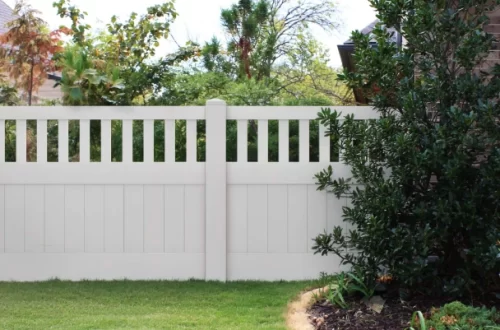
Composite railings combine wood fibers with plastic to mimic real wood. Much like the benefits seen in composite versus vinyl fencing, composite resists splintering and rot and does not require regular repainting. A simple wash keeps it fresh.
Key considerations:
- Higher initial price compared to wood
- Cannot be refinished if damaged
- Moves more in response to temperature changes than wood, so following manufacturer’s installation instructions is important
Composite systems are a popular choice for homeowners who want the appearance of wood without ongoing staining or sealing.
Metal Railings
Metal railings offer a durable solution for homeowners prioritizing longevity and clean lines.
Common options include:
- Powder-coated aluminum railing
- Steel railing systems
- Horizontal metal designs
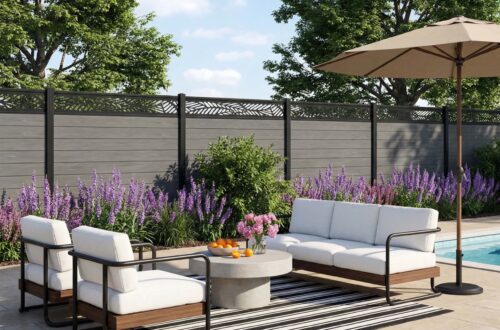
Similar to comparing aluminum versus steel fences, powder-coated aluminum, which has a baked-on protective finish, is lightweight, rust-resistant in humid climates, and available in various colors.
Some homeowners combine metal deck railing systems with wood top rails to blend traditional and modern design features.
Glass Railings
Glass railing systems use tempered glass panels mounted between posts to create unobstructed views.
Benefits include:
- Maximum visibility
- Contemporary appearance
- Wind protection
- Enhanced openness
Glass can be especially effective on elevated decks overlooking water, mountains, or landscaped yards. Combined with a modern and minimalist deck design, glass railings can create a stunning architectural appearance.
However, take note that glass railings require more frequent cleaning than other railing materials to maintain clear views.
How to Choose the Right Deck Railing
When evaluating different deck railing design ideas, consider how the railing will perform over time. Here are four practical factors to narrow down your options:
Consider Maintenance
Maintenance requirements vary significantly by material.
| Material | Maintenance Level |
| Wood | High |
| Composite | Low |
| Cable | Low |
| Aluminum | Low |
| Glass | Moderate |
Wood rails require staining, sealing, and occasional repairs. Composite and metal systems need periodic cleaning, while cable systems may also need occasional tension adjustments.
Be honest about how much upkeep you’ll handle year after year. If you’re looking for a low-maintenance solution, cable or aluminum systems may be worth considering.
Think About Visibility
One of the biggest factors in rail design is how much visibility you want to preserve.
| Railing Type | Visibility |
| Glass | Highest |
| Cable | High |
| Metal | Moderate |
| Composite | Moderate |
| Wood Panels | Low |
For scenic properties, cable and glass railings are often the best choice. For greater privacy, wooden privacy designs or composite panel systems may be preferable.
Consider Your Deck Design
Your railing should complement your overall deck design rather than compete with it.
For example:
- A modern deck often pairs well with cable or glass railings.
- A craftsman-style home may benefit from stained wood details and decorative balusters.
- A curved railing can help soften a deck built around a curve or a rounded architectural feature.
- A simple deck may look best with clean, understated railing profiles.
Choosing the right material and style helps create a more cohesive finished project.
Plan for Weather Exposure
Climate plays an important role in long-term performance.
- Aluminum and stainless steel perform well in coastal environments.
- Composite resists moisture better than natural wood.
- Glass withstands moisture but may require more cleaning.
- Ipe deck and cedar railing systems generally handle outdoor exposure better than softer woods.
In sunny climates, railing color and material can also affect surface temperatures, which may be worth considering when planning ways to keep your home cool and comfortable outdoors.
Local building codes also matter. Many building codes require railings on decks more than 30 inches above grade2 and specify deck handrail heights and deck baluster spacing requirements to help keep your deck safe. Adding waterproof awnings for decks can also help protect your outdoor space.
ALEKO Cable Railing Kits for Decks and Stairs
For homeowners interested in cable railings, ALEKO offers systems designed for both flat deck and stair applications.
Those seeking an inexpensive DIY cable deck railing solution may appreciate pre-configured kits that simplify planning and reduce the need to source components separately.
Flat Deck Cable Railing Kits
ALEKO cable railing kits work well on balconies, level deck sections, and patios when paired with patio shade ideas to keep the space comfortable. The open cable design maintains airflow and visibility.
Each kit includes the hardware needed to reduce guesswork, making setup simple for DIY homeowners.
Stair Cable Railing Kits
ALEKO stair systems are designed to align with sloped installations while maintaining consistent spacing between top and bottom rails.
The result is a unified appearance that connects stairways and deck surfaces with a consistent deck handrail design.
Each kit includes hardware intended to simplify installation and reduce guesswork for homeowners tackling a DIY project.
Find the Right Deck Railing for Your Outdoor Space
A good deck railing balances style, durability, maintenance, and code compliance. Start by identifying your top priority, such as preserving a view, minimizing upkeep, or staying within budget, then use the comparisons above to find a good fit.
The right rail can improve safety, define your deck, and support your new backyard design. Explore ALEKO’s cable railing kits for a modern option and consider adding a motorized awning for added shade.
Sources
- This Old House. Decking Materials: Composite, Wood, or Plastic? https://www.thisoldhouse.com/decking/decking-materials
- International Code Council. International Residential Code for One‑ and Two‑Family Dwellings, § R312 “Guards and Window Fall Protection.” https://codes.iccsafe.org/s/IRC2018/chapter-3-building-planning/IRC2018-Pt03-Ch03-SecR312