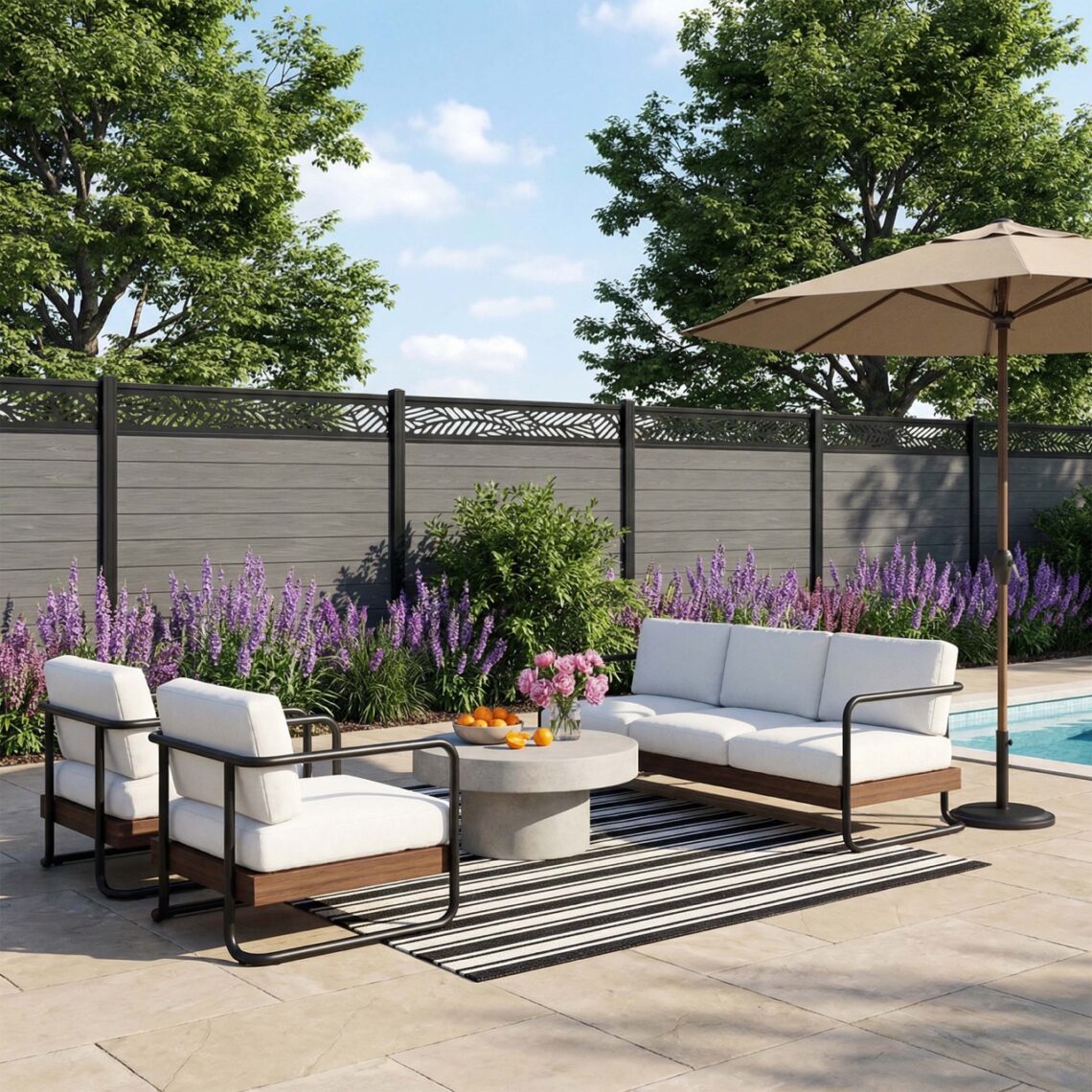
A privacy fence changes how you use your yard. People spend more time outside, kids play without an audience, and the dog stops barking at every passerby. It also blocks wind, muffles street noise, and withstands rough weather, giving your outdoor space a defined edge. For many homeowners, it really comes down to security and privacy: a fence is as much an extension of your home as it is a boundary.
Choosing a privacy fence can feel like one decision, but it’s really three separate questions: how much privacy you need, how much upkeep you’ll take on, and what you’re willing to spend now versus later. A wood fence and a vinyl fence can look identical on day one and turn into very different decisions over fifteen years. This guide compares the materials that create privacy and walks through the maintenance tradeoffs, including how much a fence costs, before you buy a new fence.
Key Takeaways
Here’s what to weigh before you commit to a material:
- A good privacy fence balances full coverage, durability, and low upkeep, not just height.
- Vinyl and composite fence panels deliver strong privacy with very little maintenance, though both cost more upfront than wood.
- Wood costs the least upfront but needs sealing or staining every two to three years and is more prone to rot and warping.
- Privacy screens and mesh panels add seclusion to an existing fence, patio, or railing for far less than a full rebuild.
- Height, board spacing, and fence style, like board-on-board or shadowbox, determine how much true privacy you get.
- Always check local height codes, HOA rules, and pool safety requirements before you buy.
What Actually Makes a Fence “Private”
Privacy comes down to three things: how solid the panels are, how tall the fence stands, and what’s planted around it.
Coverage and Board Spacing
Gaps between boards let light, air, and eyes through. Solid-panel fences close those gaps entirely, providing solid privacy across the whole yard, which is why vinyl and composite panels are built as a single continuous surface rather than individual slats.
For maximum privacy, wood fences use board-on-board construction, which overlaps each picket so there’s no straight sightline through, or shadowbox styles, which alternate boards front and back for a finished, traditional appearance on both sides with slightly less complete coverage.
Height
Six feet is the standard height for a backyard privacy fence in most areas. Some homeowners go taller for noise reduction or because a neighbor’s deck sits higher than the fence line. Some jurisdictions allow up to 8 feet, though exceeding 6 often requires a permit or variant.1
Walk your yard at different times of day before settling on a final height that matches your desired level of privacy. Also check for windows or decks on a neighbor’s second story that look down into your yard, since a standard 6-foot fence blocks eye-level views but not a view from above.
Placement and Landscaping
A fence doesn’t have to do all the work alone. Hedges, tall grasses, and climbing vines along the fence line add a second layer of privacy. This is useful in corner yards or anywhere code won’t allow a taller fence.
Best Privacy Fence Materials, Compared
There’s no single best type of privacy fence for every yard. This section compares the best materials for privacy fences (vinyl, composite, wood, metal, and screens) so you can weigh cost, upkeep, and durability side by side. The right choice depends on how much upkeep you want, how long you plan to stay in the home, and your style preferences.
Vinyl
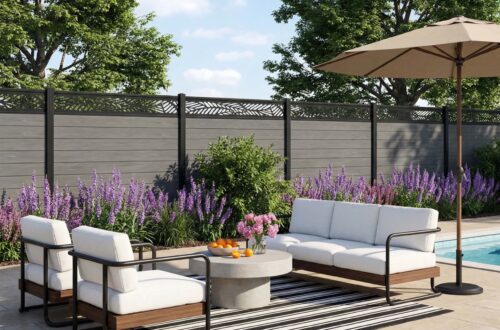
Vinyl privacy fence panels use full panels rather than individual boards, so there are no gaps to fill and no boards to warp. Vinyl skips painting, staining, or sealing entirely. It’s a low-maintenance, durable alternative to traditional materials for homeowners seeking long-lasting performance with minimal upkeep, and a well-installed vinyl fence typically lasts 25 to 30 years or more. It also holds a clean, modern look that doesn’t fade or discolor the way painted wood can.
Quick specs:
- Upfront cost — higher than wood, lower than composite
- Maintenance — low maintenance; just occasional hosing or scrubbing
- Good fit — homeowners who want the fence to look the same in year twenty as year one
ALEKO’s vinyl privacy fence uses interlocking tongue-and-groove panels, where one board’s grooved edge fits into the next board’s ridge, for full privacy with no gaps. It’s also built for DIY installation if you want to skip professional install costs.
Composite
Composite fencing blends wood fibers with recycled plastic into solid panels, a good option if you want a fence that looks like natural wood without the upkeep. A traditional wood fence often needs replacing within 8 to 12 years due to rot or insect damage, while composite can last 10 to 25 years or longer, and it resists warping since it doesn’t expand and contract with moisture the way wood does.
Quick specs:
- Upfront cost – the highest of the three main fencing materials
- Maintenance – occasional cleaning, no sealing or staining
- Good fit – homeowners who want a wood look without a wood-maintenance schedule
ALEKO’s wood-plastic composite fences uses the same interlocking tongue-and-groove design for full coverage, paired with a powder-coated aluminum post (a baked-on protective coating that resists chipping and rust) for added stability. It’s backed by a limited warranty, so it’s worth confirming current terms on the product page before you buy.
Wood
Wood is the most affordable way to build a solid-panel privacy fence, and the easiest to customize: paint it, stain it, or cut it to a custom height for a traditional look and classic aesthetics. Cedar and western red cedar are common wood choices because their natural oils resist rot and insects better than basic pressure-treated lumber, which is why cedar remains popular for residential privacy at a lower upfront cost than composite or vinyl.
Quick specs:
- Upfront cost – lowest of the common privacy fence materials
- Maintenance – sealing or staining every two to three years; annual upkeep runs $200 to $500 depending on fence size and local conditions.
- Good fit for – buyers comfortable with regular maintenance or planning to sell within a few years
Skip that maintenance, and boards start to warp, gray, or rot, especially in humid or shaded yards. For simple ways to keep your fence looking good between touch-ups, see fence maintenance.
Aluminum or Metal With Privacy Inserts
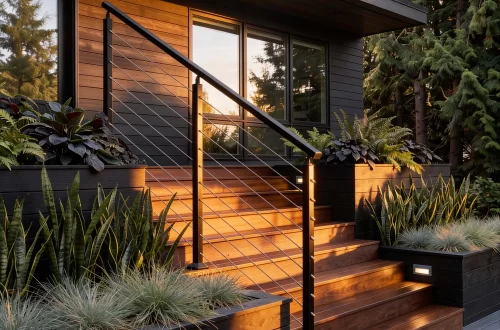
Metal framing, whether aluminum, wrought iron, or coated steel, paired with privacy inserts or slats, won’t rot, warp, or need refinishing, while the inserts still block sightlines. That strength and durability make it a middle ground between wood and the flat solidity of vinyl or composite. See the types of metal fencing to compare the metal fence styles.
Privacy Screens and Mesh
Screens and mesh panels attach to an existing chain-link fence, deck railing, or patio structure, adding seclusion in a weekend instead of a full installation. They’re the most budget-friendly way to add privacy and work well around hot tubs, pool decks, and patios where a full fence isn’t practical.
Privacy Without a Full Rebuild
If your existing fence is structurally fine but doesn’t block enough of a view, you don’t need to replace it:
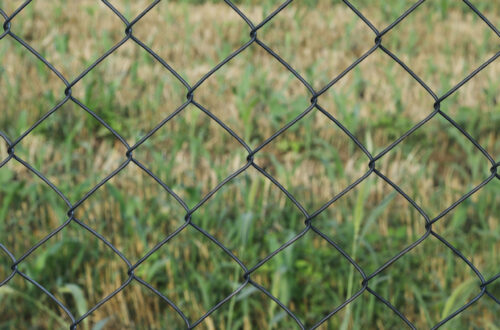
- Attach privacy slats to an existing chain-link fence to close the gaps in the diamond mesh.
- Install mesh or screen panels onto a current fence or railing, usually with zip ties or grommets (the small reinforced holes built into the panel edge for hanging).
- Set up freestanding or retractable screens around patios, pools, or hot tub areas where a fixed fence isn’t the right fit.
For more ideas, see our guide to privacy fence screen ideas.
Maximizing Privacy and Comfort
A few design choices affect how the fence actually feels to live with day-to-day.
Reducing Noise
Denser, solid materials buffer street noise and barking dogs better than open picket or split-rail styles, simply because there’s more mass in the way. Mesh screens block views but do little to quiet outside noise.
Wind and Two-Sided Curb Appeal
A solid fence blocks the most wind and provides the most privacy, which can stress posts in exposed locations. Shadowbox or narrow-gap slatted styles let some air through while still blocking most direct views. Like board-on-board and most vinyl or composite panels, they look the same from both sides, so neither you nor your neighbor is stuck looking at exposed rails. Some HOAs require this consistency, so check community guidelines before choosing a style.
Cost vs. Maintenance: Privacy Per Dollar
| Material | Upfront Cost | Maintenance | Typical Lifespan |
| Wood | Lowest | High — seal or stain every 2–3 years | 10–20 years |
| Vinyl | Mid to high | Low — occasional cleaning | 25–30+ years |
| Composite | Highest | Lowest — occasional cleaning | 25–30+ years |
| Screens and mesh | Lowest | Low | Varies by product |
Wood fences need power washing and staining every two to four years, plus repairs for warped or rotted boards, which adds real cost over the fence’s life.6 Vinyl and composite ask for almost none of that. Wood tends to win if you’re selling within a few years; vinyl or composite wins if you’re staying long enough for lower maintenance to offset the higher initial cost.
Before You Buy: Height Codes, HOA, and Property Lines
Confirm these before ordering fence panels:
- Allowable height for your yard zone — front yards are typically capped at 3 to 4 feet, backyards allow up to 6 feet, sometimes 8 feet with a grade difference or permit.2
- Setback distance from the property line — a survey or plat map confirms the exact boundary before you dig.
- Pool safety codes, if the fence encloses a pool — most jurisdictions require self-closing, self-latching gates and a minimum barrier height.
- Buried utility lines — call 811 a few business days before digging so crews can mark underground utilities first.3
- HOA design rules covering material, color, or style, plus installation details like post depth and permit needs.
Codes vary more than most homeowners expect. Even neighboring cities can set very different caps,4 so don’t assume your neighbor’s fence height applies to your lot.
Create Your Private Retreat With ALEKO
Finding the right fence comes down to matching the material to how you want to live with it. If low weekend upkeep matters more than upfront savings, vinyl or composite is worth the higher cost. If you’re comfortable with regular maintenance and want the flexibility to paint or stain, wood remains a reasonable choice on a tighter budget. And if your existing fence just needs a privacy boost, screens and mesh solve that without construction.
Whichever direction fits your yard, ALEKO offers privacy screens and vinyl and composite fence panels built for backyard seclusion: a fence that’s easy to live with and a solid choice for your home, once you’ve settled on the height, coverage, and maintenance level you need.
Sources
- LegalClarity. How Tall Can My Backyard Fence Be? Limits & Permits. https://legalclarity.org/how-tall-can-my-backyard-fence-legally-be/
- LegalClarity. Fence Height Limits: Local Laws, Permits, and HOAs. https://legalclarity.org/how-high-can-my-fence-be-local-laws-and-height-limits/
- 811 Before You Dig. Before You Dig. https://811beforeyoudig.com/before-you-dig/
- MaintainFree. Fence Height Regulations: 4 Reasons Why These Exist.https://maintainfree.com/fence-height-regulations/