When choosing a new gate for your property, there are two main types to consider: sliding gates vs. swing gates. Both offer security, visual appeal, and automation potential, but they function quite differently and are suited for different environments. Understanding how each gate type operates and what it requires can help you make a more informed decision for your home or business.
What Is a Sliding Gate?
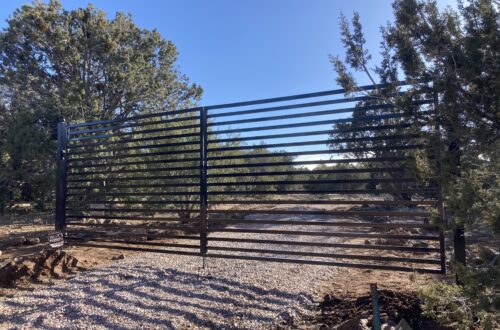
A sliding driveway gate, also known as a slide gate, operates by moving horizontally along a track or by cantilevering off the ground. This gate type is often used in areas with space restrictions because it does not swing open but instead slides parallel to the fence line. Sliding gates are commonly seen in commercial gates, industrial facilities, and residential properties where maximizing space efficiency is a priority.
Slide gates can be either track-based or cantilever gates. Track-based systems run on wheels along a ground track, while cantilever slide gates operate without ground contact, making them suitable for uneven terrain. With the addition of a slide gate opener, these gates can become fully automatic, offering convenient and secure entry.
What Is a Swing Gate?
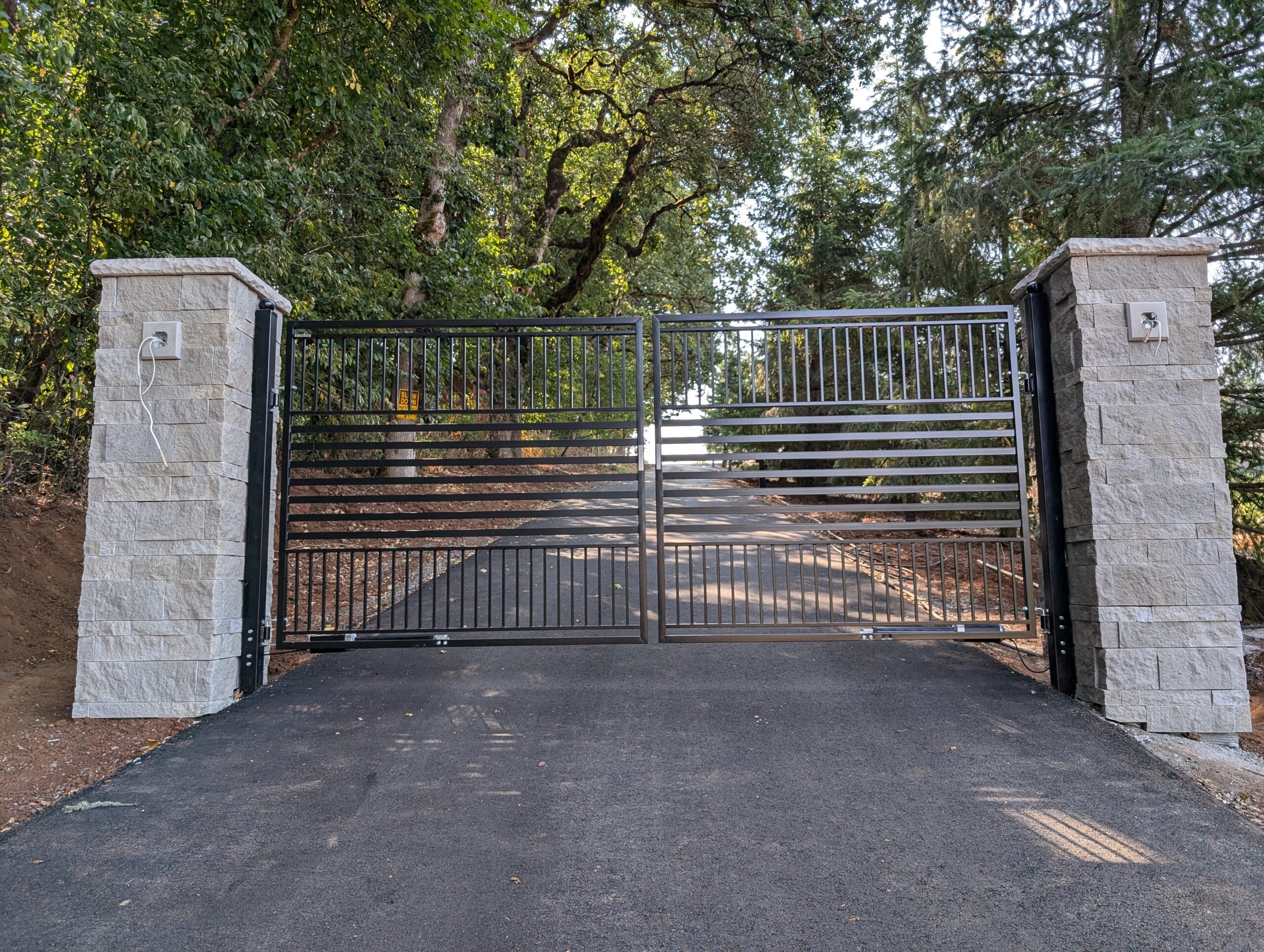
A swing gate functions similarly to a door, swinging open and closed on hinges. This can be done with a single swing gate or a double swing gate, depending on the width and design preferences. Swinging gates are often selected for their classic appearance and straightforward installation.
Swing gates require clear space to open inward or outward, and the size of that clearance space will depend on whether the gate is single or double. With the right gate operator, a swing gate can also be automated to improve security and user convenience.
Space and Installation Requirements
How Much Space Does Each Gate Need?
Space is one of the most important factors in determining whether a rolling gate vs swing gate is better for your property. A sliding gate moves horizontally across a fence line and therefore requires space along the side of the opening for the gate to retract. This makes it an excellent choice for narrow driveways or properties with limited clearance in front or behind the gate.
In contrast, a swing gate needs enough room to swing open either inward or outward. This means you must account for the full length of the gate leaf and ensure the area remains unobstructed. Properties with shorter driveways or obstacles such as slopes, landscaping features, or vehicles may find swing gates more challenging to accommodate.
Terrain and Slope Considerations
The terrain surrounding the driveway entrance is another crucial aspect to evaluate. Sliding gates are better suited for uneven terrain or sloped driveways because the cantilever design does not rely on a level ground surface to function properly. Cantilever gates are also ideal when snow, gravel, or debris might interfere with a traditional ground track.
Swing gates, on the other hand, require a flat surface to open smoothly. Installing a swinging gate on a slope often leads to clearance issues, dragging, or excessive wear on the hinges. While there are custom solutions available, they typically increase the complexity and cost of the installation.
Cost Comparison
Gate Material and Size Impact
The cost of any gate begins with the material and size. A larger gate made from high-end materials such as wrought iron will naturally cost more than a smaller, lightweight gate made from aluminum or steel. Both sliding and swinging gates come in a variety of sizes and materials, but sliding gates may involve more structural reinforcement, especially if you opt for a cantilever design.
If you are installing an automatic gate, be sure to factor in the cost of a gate opener, which varies depending on the gate type and weight. ALEKO offers a wide selection of swing and slide gate openers designed to match different gate specifications.
Installation Costs
Installation costs differ between the two gate types due to their structural requirements. Swing gates generally have a more straightforward installation process, especially for single swing gates. Hinges are mounted to existing posts or walls, and the gate operator is installed with minimal groundwork.
Sliding gates typically involve more labor and materials. If using a ground track, a concrete foundation may be needed. For cantilever gates, you will need counterbalance posts and a specialized support system. These extra steps make slide gate installation more expensive overall.
Long-Term Maintenance Costs
Over time, both gate types will require maintenance, but the nature and frequency of repairs differ. Swing gates rely heavily on hinges and gate operators, both of which can wear out with frequent use. Improper installation or imbalance can lead to sagging, misalignment, or the need for repeated gate repair.
Sliding gates, especially cantilever gates, tend to have fewer moving parts in contact with the ground. This reduces wear and tear, particularly in harsh weather or debris-filled environments. However, track-based sliding gates require regular cleaning and inspection to prevent obstruction and ensure smooth operation.
Security and Durability
Which Offers Better Protection?
Both gate types can be equipped with gate automation systems and electric gate access, significantly enhancing security. A sliding gate typically offers slightly higher protection because it cannot be easily pushed open once in the closed position. The interlocking mechanism and horizontal movement make it more resistant to forced entry.
Swing gates can also be very secure, especially when paired with a strong gate operator and lock. However, the swing motion may offer more leverage for tampering if not reinforced with high-quality materials and components.
Resistance to Weather and Wear
Cantilever sliding gates have the advantage when it comes to withstanding weather-related wear. Since they operate without ground contact, they are not affected by ground freezing, mud, or uneven settling. Track sliding gates, however, can become clogged with debris and may require more upkeep in areas with heavy snow or rain.
Swing gates are susceptible to wind pressure and may swing unintentionally if not properly secured. Over time, moisture and corrosion can impact the hinges, especially if the gate is made of iron or steel and lacks a protective coating.
Aesthetic and Design Considerations
Matching Your Property Style
Design plays an important role in selecting the right gate. Swing gates often align well with traditional or decorative styles. They pair naturally with a picket fence or wrought iron fence, offering a welcoming appearance that suits residential properties.
Sliding gates tend to lend a more modern and industrial aesthetic. They are commonly used in commercial settings but can also be customized for residential use with various materials and finishes.
Customization Options
Both gate types offer a range of customization options. From color to material to decorative elements, you can tailor your gate to complement your home or commercial property. ALEKO provides an array of sliding and swinging gate styles, including ornamental panels, privacy-focused designs, and minimalist steel structures.
You can also choose between single and double gate configurations. Double swing gates, for example, allow for wider openings and are often used for grand entrances. Bi-parting gates are another variation that splits the opening into two sliding panels moving in opposite directions.
Maintenance and Longevity
Common Issues with Sliding Gates
Sliding gates are generally low maintenance but can face issues with alignment, debris buildup, or damaged rollers. A well-maintained cantilever slide gate can last many years, especially if built with corrosion-resistant materials and a high-quality gate opener.
Common Issues with Swing Gates
Swing gates may encounter hinge failure, sagging, or motor strain over time. Regular lubrication and proper alignment are key to preserving their longevity. Wind damage is another concern, particularly for wide or tall gates without wind bracing.
Final Thoughts: Which Gate Is Right for You?
Choosing between a sliding gate and a swing gate depends on several key factors, including available space, terrain, desired aesthetic, and budget. If your driveway is short, sloped, or you have limited room to accommodate a gate swing, a sliding gate may be the better option. On the other hand, if you have a flat property with plenty of clearance and want a timeless, elegant look, a swing gate could be a perfect fit.
Both options can be fully automated with ALEKO’s range of gate openers and integrated with security systems. Whether you prioritize space efficiency, curb appeal, or ease of installation, ALEKO offers high-quality solutions for both sliding and swinging gate systems.
Explore ALEKO’s full selection of sliding gates and swing gates to find the perfect match for your property.