Chain link fencing is one of the most versatile metal fences available today. From basic property boundaries to perimeter security, this type of fence can be adapted to suit a wide range of needs. Understanding the different types of chain link, their grades, and materials helps you choose a fencing material that balances cost, performance, and longevity.
This guide explains how chain link fencing is made, what separates residential and commercial grades, and how coatings and framework affect performance. Whether you’re planning a new fence, replacing an old one, or comparing fencing options, this overview helps you choose confidently.
Understanding Wire Gauge and Mesh Size
Wire gauge measures the thickness of the galvanized steel wire used in chain link fabric. Lower gauge numbers mean thicker, stronger wire. For example, 9 gauge wire is heavier and more durable than 11 gauge. This matters because thicker steel wire better resists bending, breaking, and damage from impacts.
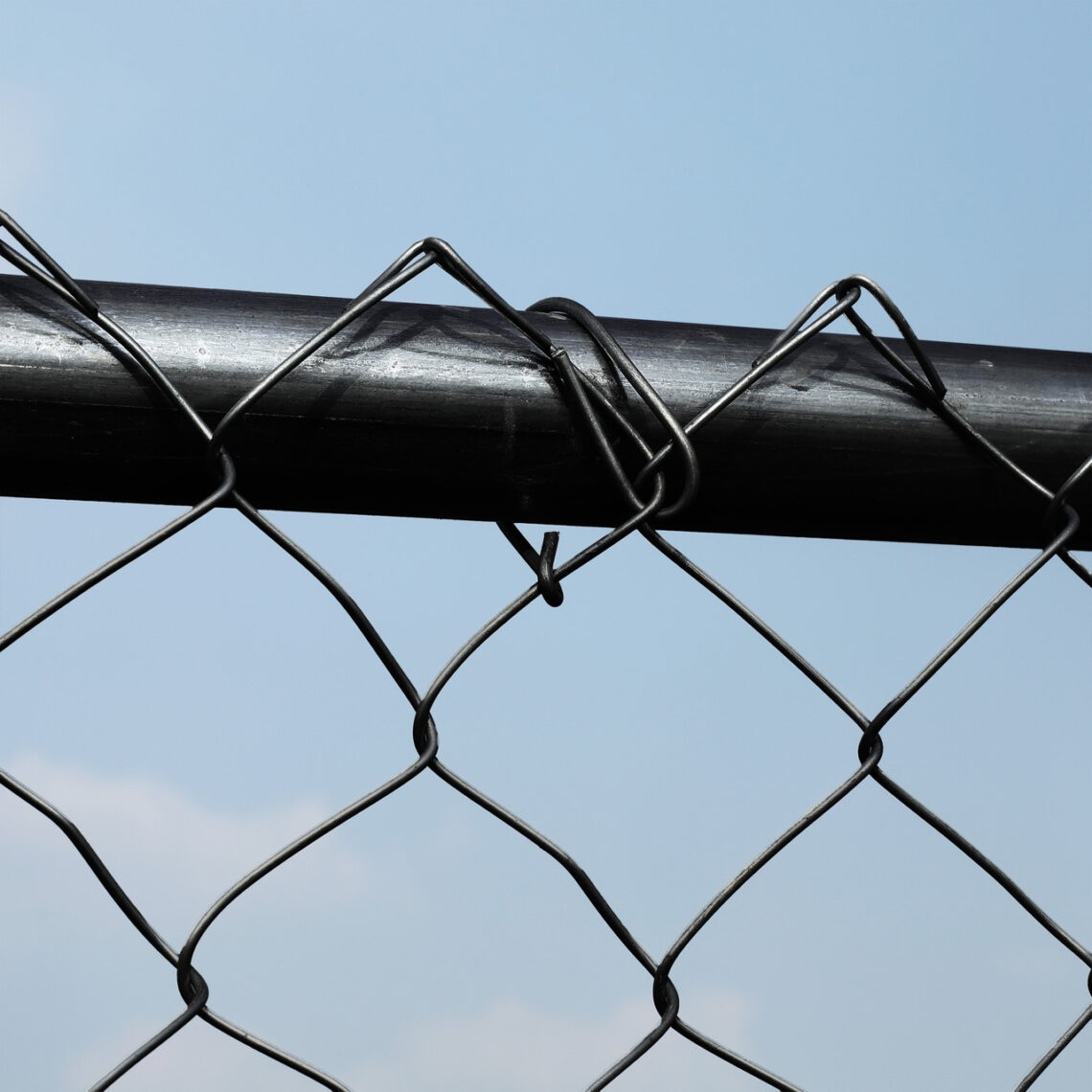
Chain link mesh size refers to the diamond-shaped openings in the fence fabric. Standard residential chain link uses 2-inch mesh openings, which work well for property boundaries and pet containment. Smaller “mini-mesh” openings provide better security by preventing climbing and keeping small animals from squeezing through.
Here’s how different wire gauges compare for common applications:
| Gauge | Wire Thickness | Best For |
| 11-11.5 | Lighter, thinner | Residential backyards, property lines |
| 9 | Medium thickness | Commercial properties, sports fields |
| 6-7 | Heavy-duty | Industrial sites, high-security areas |
ALEKO’s chain link fence fabric comes in galvanized steel with standard mesh sizes suited for residential and light commercial applications.
Framework Components That Determine Fence Strength
Line posts are intermediate supports spaced typically 10 feet apart. Terminal posts sit at corners, ends, and gate openings, requiring thicker diameters to anchor the structure. For official standards on post sizing and spacing, designers can consult the Chain Link Fence Manufacturers Institute’s Guide WLG 2445.
The top rail runs horizontally to keep the fabric rigid and prevent sagging. An optional bottom rail adds strength in high-traffic areas and stops the fabric from lifting at ground level.
Wall thickness determines how much stress fence posts can handle. Residential frameworks use lighter tubing, while commercial systems use heavier Schedule 40 pipe, a type of thick-walled steel pipe, for greater durability. Lighter frameworks can bend or lean over time, while heavier frameworks are built to remain straight and stable for much longer.
When planning installations with privacy screens or other accessories, ASTM standards recommend using stronger framework and parts with closer post spacing to handle additional wind loads.
Galvanized vs. Vinyl-Coated Chain Link
Protective coatings shield the wire from rust, extending the fence’s lifespan. The two most common types are galvanized and vinyl-coated finishes.
Galvanized Chain-Link
A galvanized chain link fence receives a zinc coating through hot-dip galvanizing. This traditional finish resists rust and typically lasts 15 to 20 years. It is a cost-effective option that offers a classic silver appearance suitable for many properties.
Vinyl and PVC Coated Chain Link
Vinyl coated and PVC coated fencing adds a colored layer over galvanized wire. Options include black vinyl, green, and brown, often referred to as colored chain link.
Benefits of coated options include:
- Improved resistance to rust and corrosion
- Smoother, safer surface for pets and children
- Better aesthetics for residential properties
A PVC coated chain link fence typically lasts longer than bare galvanized fencing and works well for residential and commercial settings.
For extreme environments, stainless steel chain link or a stainless steel chain link fence offers the highest corrosion resistance. Some systems also incorporate aluminum chain link components for lighter-duty applications.
Vinyl coatings last 20 to 25 years with proper maintenance. For coastal properties or harsh weather areas, the extra protection is worth the investment. Stainless steel options offer the highest level of corrosion resistance for extreme environments.

Residential, Commercial, and Industrial Grades Explained
Residential fencing is designed for backyards, side yards, and property lines:
- Lighter wire gauge
- Standard mesh
- Suitable for privacy chain link add-ons like slats
This fence is also commonly paired with a slatted chain link to add privacy to your chain link without switching to a full privacy fence.
Commercial and Security Fence
Commercial fencing uses heavier materials and stronger framework:
- Thicker posts and rails
- Stronger fabric for chain link security
- Often paired with a chain link gate
Industrial installations may include barbed wire at the top for added deterrence. These systems are common for warehouses and utility areas where fences are often taller fences with strict performance requirements.
Industrial-grade fencing secures warehouses and high-security perimeters, using heavy 7 gauge fabric with 2-inch or smaller mesh. The framework uses 2-1/2 or 3-inch line posts with larger terminal posts, and installations often include barbed or razor wire for additional security.
Choosing the Right Grade for Your Property
Identify your primary goal. Are you marking a property line, containing pets, or deterring intruders? Each purpose points toward a different grade.
Property type matters; a backyard has different needs than a warehouse. Consider the budget versus longevity tradeoff: lighter grades cost less upfront but may need earlier replacement, while heavier grades require more initial investment but last longer.
Local conditions affect coating choices. Coastal properties benefit from vinyl-coated or aluminized options as salt air accelerates corrosion. Areas with extreme temperature swings also require proper coating protection.
Use this decision framework to narrow your options:
- Basic property lines or pet containment: Residential-grade galvanized (11-11.5 gauge)
- Aesthetics and extended durability: Residential-grade vinyl-coated (9-11 gauge)
- Business security or sports fields: Commercial-grade galvanized or vinyl-coated (9 gauge)
- High-security or industrial use: Heavy-duty galvanized or aluminized (6 gauge, mini-mesh)
ALEKO’s chain link fences come in various heights and coatings to match different property requirements.
Common Mistakes When Comparing Fence Grades
Choosing the lightest gauge to save money often backfires. Thin wire often fails to withstand wind loads or active pets, leading to higher repair or replacement costs.
Homeowners should also check HOA rules and local building codes before purchasing. Many areas require specific fence heights, grades, or approved colors, particularly for pool fencing or street-facing installations. Overlooking these requirements can result in costly changes after installation.
Other common issues are tied to installation details:
- Skipping bottom rails or tension wire – Without proper support at ground level, pets can push underneath the fabric. Adding these components during installation is far more cost-effective than retrofitting later.
- Overlooking post spacing and framework strength – Even strong fence fabric will sag if posts are spaced too far apart or the framework is undersized. The fence is only as stable as its supporting structure.
Get the Right Chain Link Fence for Your Property
Selecting the right fence grade involves matching wire gauge, mesh size, framework, and coating to your needs. Residential applications need lighter specifications than commercial sites, and understanding these differences helps avoid overspending or underbuilding.
Whether you need a backyard boundary or a robust perimeter, ALEKO provides the right fencing solution for your property.