When you picture a polished storefront, a lively patio, or a welcoming entrance, you might not immediately think of awnings, but they’re often the quiet heroes behind that first impression. A well-designed commercial awning doesn’t just look good; it transforms the energy of an outdoor space, influences your customer experience, and even can play a subtle role in your business’s success. Whether you’re a business owner or are simply curious about how commercial awning installation really works, this guide breaks it all down in a way that’s easy and informative.
Installing an awning isn’t something you do on a whim. It’s a thoughtful, multi-step process that blends design, engineering, craftsmanship, and practicality. When done well, the end result, a beautiful awning, stands strong against weather conditions, adds long-term curb appeal, and instantly elevates any outdoor area.
Let’s dive into everything you need to know before starting your next awning project, from planning and materials to professional installation, maintenance, and choosing the right awning for your needs.
Why Businesses Choose Commercial Awnings
Awnings do more than protect your windows and door from heat or rain. They serve as a multifunctional asset delivering shade, visual branding, and reliable weather protection. Whether you’re welcoming foot traffic, creating a shaded seating area, or dressing up a blank facade, awnings help shape the environment your customers experience.
The charm lies in their versatility. A sleek storefront awning gives businesses a refined edge, while a spacious patio awning transforms unused outdoor square footage into a lively extension of the property. And if branding is important to you (which it usually is), a custom awning becomes a unique canvas that highlights your business identity from the moment someone approaches your building.
For many businesses, UV protection is a huge bonus. Awnings shield your entrance and windows from harsh uv rays, which helps preserve interior décor and creates a cooler, more comfortable indoor climate.
Types of Awnings: What You Should Know Before Choosing One
The best installation starts with selecting the best product. Not all awnings are built the same, and understanding your options helps you invest smartly.
Fixed Awnings
A classic choice, fixed awnings (often referred to as fixed awning systems) stay in place year-round. While many people find themselves choosing between fixed vs. retractable awnings, the fixed styles are known to be extremely reliable, best for long-term shading needs, and excellent when you want constant protection without moving parts. Restaurants, retail shops, and medical offices often choose these for consistency and lower maintenance requirements.
Retractable Awnings
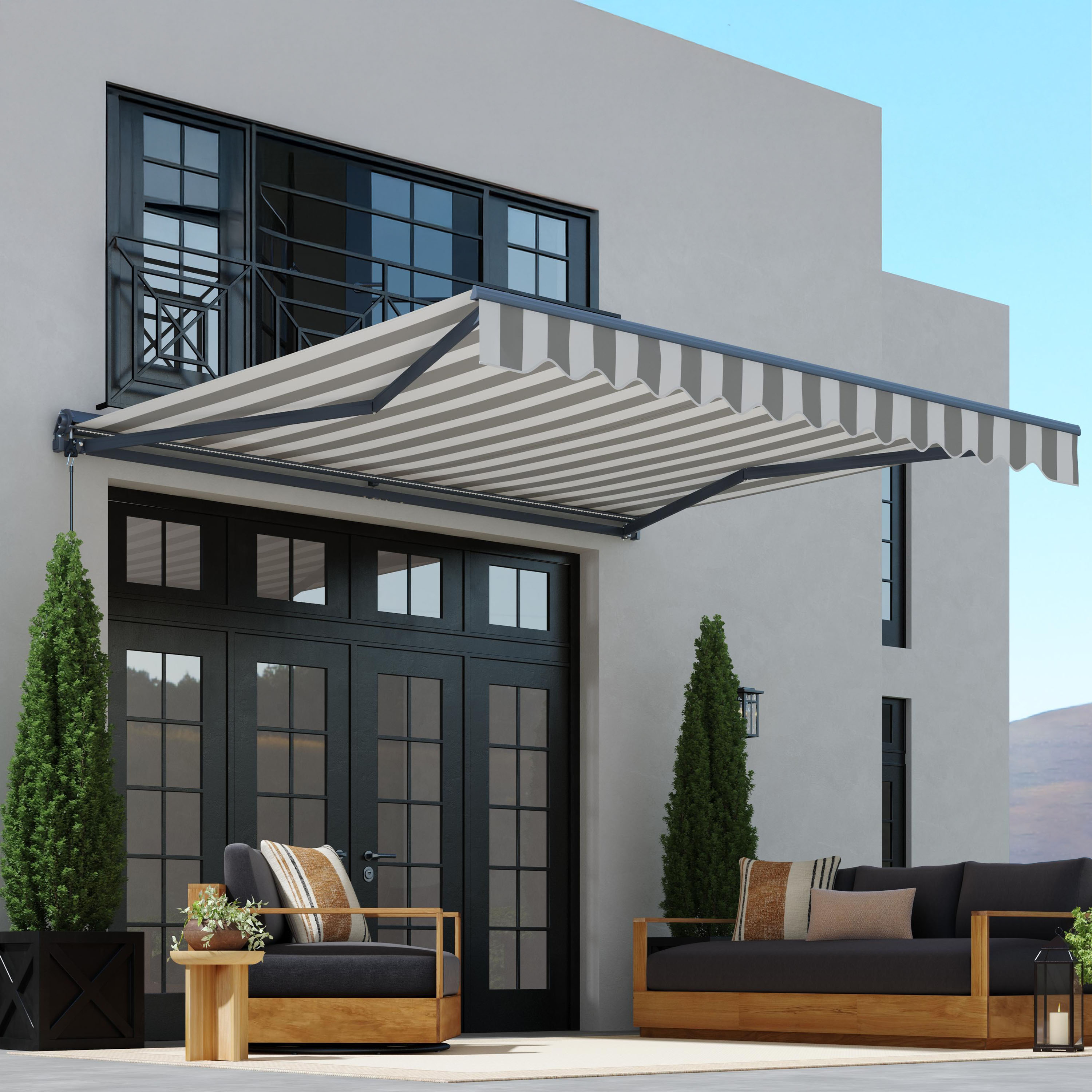
The star of many modern spaces, the retractable awning offers flexibility and control. During cooler mornings, you might pull your awning open; when the afternoon sun gets intense, you can extend it for relief. For businesses needing versatility, like cafés with outdoor seating, a commercial manual retractable awning or motorized retractable awning is often the ideal solution.
Fabric Awnings
A favorite for their softer aesthetic, fabric awnings bring color, creativity, and character. They complement storefronts beautifully, especially when paired with a standout awning design. Fabrics come in UV-resistant, fade-resistant, and weather-friendly varieties that maintain their appeal for years.
Metal Awnings
Built to last, metal awnings and aluminum awnings offer durability that withstands harsh weather element exposure. They’re a great pairing when a modern, sleek look is the priority, favored by businesses in industrial districts or contemporary retail spaces.
Residential Awnings
Even though we’re focusing on commercial applications, some businesses with home-like properties or home-based services may consider a residential awning style. These are generally lighter but still effective, especially for quieter, low-traffic storefronts.
Choosing the right product depends on your building, climate, business goals, and personal taste. Fortunately, ALEKO offers shade products that fit every category.
Planning Your Commercial Awning Installation
Before any drilling or measurements begin, the planning stage sets the tone for a smooth and successful installation. Think of it like laying out the blueprint for your future new awning, every detail matters.
Start by identifying the main purpose of your awning. Do you want to shade a dining area? Protect a walkway? Add decorative flair? Or improve energy efficiency by blocking harsh sunlight through your windows? Each purpose may affect size, shape, material, and even the type of awning frame you choose.
During planning, make sure to consider the path of the sun, access for future cleaning, exposure to wind, and nearby landscaping that may drip sap or drop leaves onto the awning. These factors help ensure fewer headaches later on.
The Installation Process: What Actually Happens?
So, how does commercial awning installation unfold? While every project varies in complexity, most follow a predictable rhythm.
It usually begins with precise measurements. Installers assess the building layout, the angle needed for shade, and the proper height to ensure the awning provides maximum coverage without obstructing signage or entryways. From there, the chosen awning frame, crafted from aluminum, steel, or composite materials, is prepared for your structure.
Once the framework is secure, the installers attach the fabric, metal panels, or canopy material. This is when the awning starts to take shape, transforming from raw materials into a true architectural feature. Those opting for a motorized awning or automated system will also have electrical components installed during this stage, ensuring smooth function and reliable controls.
The final step is testing. Installers inspect the stability, verify movement if it’s a retractable system, and make sure the awning can withstand everyday weather conditions. When done correctly, the awning should look seamless, almost as if it’s always been part of the building.
This is why professional installation is so important. You’re not just hiring someone to attach something to your wall; you’re investing in structural safety, long-term durability, and the proper functioning of your awning solution.
How Commercial Awnings Improve Business Spaces
One of the most underrated aspects of awnings is how much they redefine a space. Imagine a bland façade suddenly elevated by a beautiful awning with bold colors. Or a once-scorching patio turned into a comfortable dining area under a wide canopy. These changes are incredibly valuable to a business’s bottom line.
Awnings improve comfort, making customers linger longer, especially in hospitality environments. They also expand usable square footage, giving you more room for seating, product displays, or simply a more welcoming entrance. And because they block heat and sun, awnings reduce fading of merchandise and interior furniture, extending its lifespan.
It’s all these subtle advantages combined that contribute to stronger customer satisfaction and an elevated brand presence.
Choosing the Right Awning Company
A successful installation is all about partnering with the right team. A reputable awning company should offer guidance on materials, engineering, installation requirements, and commercial awning maintenance expectations. Look for businesses that value craftsmanship, communication, and experience in the type of awning you need, whether that’s a window awning, a patio awning, or a bold custom storefront.
Good companies will walk you through every step, from selecting fabrics to understanding how your awning will respond to long-term exposure, nearby construction, or unpredictable weather element patterns.
Common Mistakes to Avoid During Commercial Awning Installation
Just like any enhancement, there are pitfalls to avoid. One common mistake is choosing the wrong size, either too small to be effective or too large for the architecture. Another misstep? Skipping professional installation and attempting a DIY fix. Commercial structures require precise anchoring and advanced installation techniques to ensure the awning performs safely.
Business owners should also avoid selecting materials that don’t match their climate. For example, using a light fabric awning in areas with heavy rainfall might require more frequent maintenance than expected. Meanwhile, some metal awnings may handle coastal climates better.
The goal is always the same: match the material, size, design, and mounting style to the environment so your awning thrives.
Maintaining Your Awning After Installation
Once your new awning is installed, the work isn’t completely done, but the ongoing care is pretty manageable. Keeping the awning free of debris, rinsing it occasionally, and checking portions of the frame for wear helps preserve its longevity. Businesses in busy cities may clean more often due to pollution and dust, while those in quieter neighborhoods clean less frequently.
Regular inspections ensure your awning continues providing shade, comfort, and charm for years to come.
Final Thoughts
Adding a commercial awning to your building is more than a simple upgrade, it’s an investment in beauty, comfort, branding, and long-lasting value. Whether you choose a commercial retractable awning, aluminum awnings, or a fully custom awning tailored to your architecture, the right awning installation elevates your entire space and creates a welcoming environment for your customers.
And if you’re ready to explore high-quality awning products engineered with durability, style, and craftsmanship in mind, ALEKO offers a wide selection of shade and outdoor living solutions built to stand up to the elements while enhancing your building’s overall aesthetic appeal. When it comes to transforming an outdoor space, ALEKO makes it easier to bring your vision to life, one shade-ready, expertly crafted awning at a time.